
Becoming Kylian Mbappé
The France and Real Madrid striker was forged in the streets and schools of the Paris suburbs. By Philippe Auclair.

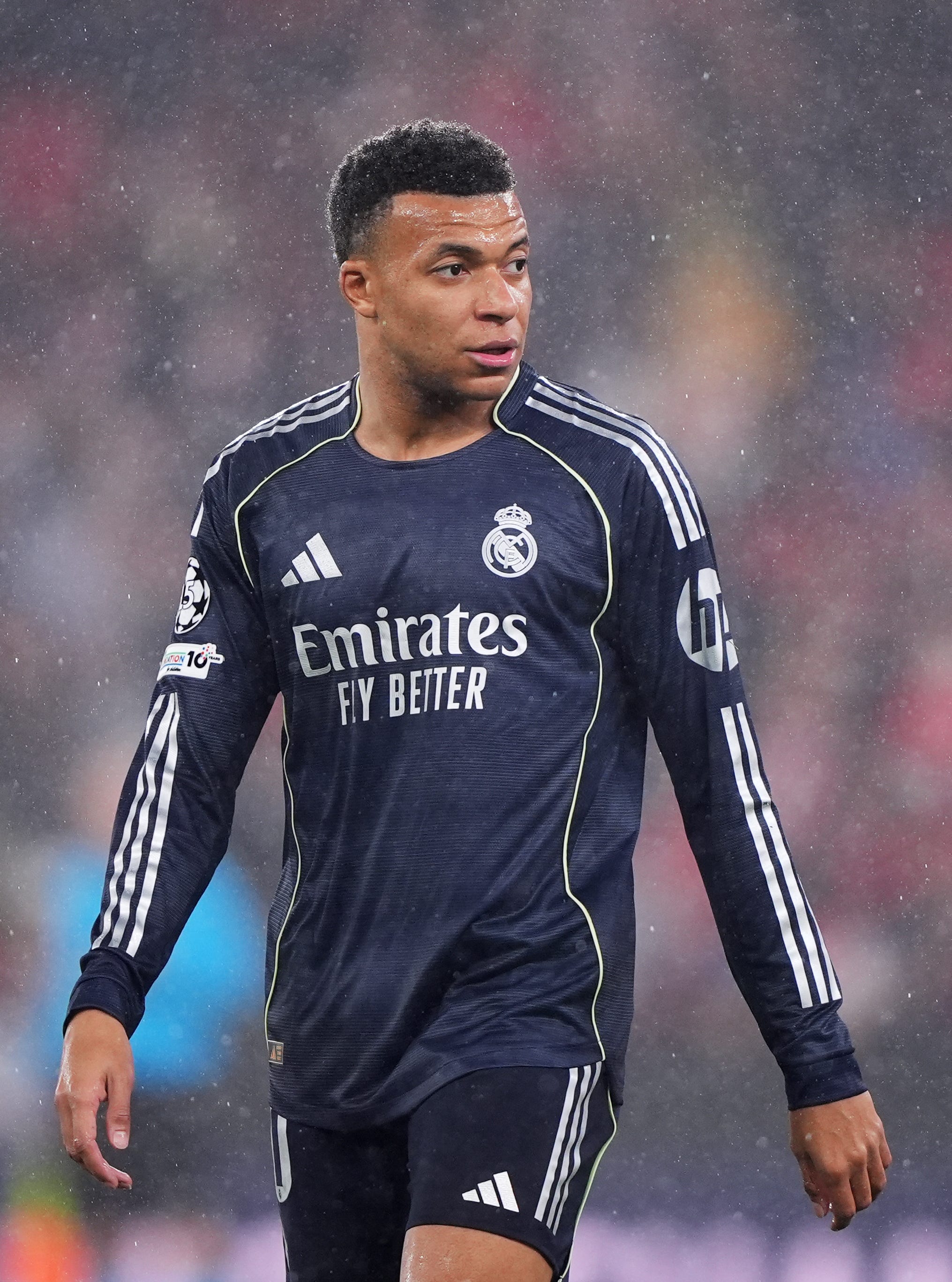
Not all professional footballers love the game. Some will admit to it in public, like Marc-André ter Stegen of Barcelona, Ben White of Arsenal or the Cameroon international Benoît Assou-Ekotto, formerly of Tottenham Hotspur, who never hid the fact that he was primarily motivated by money and did not fancy working “all his life in an office for €1,500 a month” in order “to buy a little suburban apartment or something” at the end of his career. Then there are those footballers who detest their profession and have good reason for this.
‘S’ was one of these. He was an enigma to his teammates, a loner who did not join in the dressing-room banter; but he could make the ball sing so well it is a mystery why he never received a call-up to his country’s national team. His career spanned almost 20 years, which he spent in top-tier European clubs; he played well over 50 games in Uefa competitions, some of them in the Champions League; songs were sung in his honour. Yet he hated football.
Another footballer who’d trained at the same academy told me why: ‘S’ had been abused by his own father for years. The pattern is well-known. Parents waking their child up at dawn for their morning reminders that the family has invested so much time and money into the kid’s future that every indifferent performance is a betrayal. ‘S’ had gone through all of this; but he’d also gone through far worse. His father, a former amateur footballer himself, was a sadist. The family lived in the countryside, nine or 10km from the academy. If he thought his son had failed to give his best in a training session, he’d stop the car as soon as they were out of sight. ‘S’ would have to step out and run back home, his father driving behind him in first gear, with headlights on, left arm resting on the open window, shouting abuse and honking the horn if the child was slacking. It didn’t matter how cold it was, it didn’t matter if it rained or snowed, which it often did in that part of northern Europe. It didn’t matter if ‘S’ cried or pleaded to be spared just this once. My informer knew this because he’d been in that car a few times himself and watched his friend, still in his training kit, pound the surface of the road in the dark. The father didn’t give a damn if another child saw what he was doing to his son. The club must have known as well but did nothing. But why did ‘S’ stay in football, then, and for so long, long after he had earned enough to ensure he would never have to work again? He knew about nothing else, his friend said. He felt lost outside of the only world he knew. He’d finished school without any qualifications, so what could he do? More than anything, he was still under the influence of the man who’d tortured him throughout his childhood and his teenage years.
What ‘S’ went through, countless children are also going through today, in France as much as anywhere else; France where this kind of parental obsession is now referred to in the media as – yes – un projet Mbappé. The bitter irony is that the actual projet Mbappé has nothing to do with this cruel simulacrum of care, in which ambition cannot be distinguished from coercion. It is so widespread now that it has become a branch of the football industry, as professional clubs realised how offering training camps to children as young as three was a lucrative business. PSG were charging €1,190 per child for its Easter six-day course in 2024, sweetening its offer with a “free” tour of the Parc des Princes, a complete Nike training kit and “awards for all participants” at the “ending ceremony”. Barcelona now run more than 30 of these academies spread over 180 campuses throughout the world. A 10-day course in Barcelona itself costs just under US$3,200. Everyone is welcome, regardless of talent, as it is not about talent-spotting anymore. It is about making money by playing on the unrealistic aspirations of parents as much as on the passion of their children. Imagine going back to school and telling your friends what you did during the holidays just by pointing at the badge on your T-shirt.
Private football training schools and coaches are also doing well out of it, especially in France, to the extent that the projet Mbappé phenomenon made the national news in the autumn of 2024. The public broadcaster France Bleu had no problem finding a pushy father who not only paid a (non-qualified) trainer to put his seven- and nine-year-old sons through extra sessions every Sunday but had also bought all of the training kit needed for their exercises. One child the reporters spoke to had individual football tuition of this kind six evenings a week on top of his club’s training programme. None of these youngsters had shown particular promise or been scouted by professional clubs. These are not isolated examples. More and more families are spending large amounts of money on individual tuition in the misguided belief that this is what Kylian’s parents did themselves. They did not. What they did was to provide the education best-tailored to Kylian’s own needs, which were many, and talent, which was exceptional.
When the French TV network Canal+ questioned him in December 2024 about the projet which now bore his name, Mbappé exploded. “Stop it, cut it out, cut it all,” he said. “My parents never put any pressure on me. My dad never made me run round the pitch at six in the morning with a stopwatch in his hand. They let me have fun.”
Kylian went on, talking about himself in the third person, something he’s not known to do usually; but the moment was well-chosen. The ‘icon’ was talking, a then 25-year-old man who knew how the story of his own progress to the top had become a fanciful roadmap for the ‘next Kylians’, as he called them in his Players’ Tribune column.
In November 2021, together with L’Équipe’s resident cartoonist Faro, Mbappé published an autobiographical comic book, Je m’appelle Kylian, which sold 250,000 copies in France alone. The book’s message was clear: “If you believe in your dream, you’ll make it come true,” a child-friendly version of his sponsor Nike’s advertising mantra, “Just Do It”. One of the three Mbappé murals in his hometown shows Kylian in his PSG kit with this slogan: “Bondy, ville des possibles” (“Bondy, city of possibilities”). Yes, you can. Why? Because I did it. Should he be so surprised that those who admired him the most would take him at his word?
“When it started to become serious,” he explained, “it’s true that, very early on, I had a discussion with my parents. ‘What do you want to do? Do you want to be a footballer? What kind of footballer do you want to be?’ I told them: ‘I want to be a great one. I want to be one of the best in the world. I don’t want anyone in front of me.’ But I made the choice. It’s not my father who imposed it on me, even though he’s mad about football. He was very happy I’d taken this decision but [choosing] football, it must come from [the children]. Let them have fun. Don’t worry, there’ll be a time when it’ll become serious. If it has to become serious, it’ll become serious.”
When this discussion took place is not known. The Mbappé family folklore is full of stories about Kylian the baby, who was given a football when his mother was still in the maternity ward, the toddler who didn’t go anywhere without it, and the little boy, who was so obsessed with the game that he told everyone – aged four, or five, depending on the storyteller – that he’d go to Clairefontaine to start with, then to Rennes, like big brother Jirès, then to Real Madrid, like his idol Cristiano Ronaldo and Zinedine Zidane. He’d watch every game that was broadcast on television, stand to attention when “La Marseillaise” was played, eyes closed, hand on heart. He’d sneak into the team talks that his father Wilfrid gave AS Bondy’s senior team on matchdays. He played a version of “Let’s Pretend” in which he took the role of a star footballer answering questions from journalists at a press conference; but all of this came from him, and him alone. There are no tales of Wilfrid holding his newborn son aloft and proclaiming, “One day, you will play for France!”, as Thierry Henry’s father Antoine is said to have done.
Wilfrid later told L’Équipe that “before Kylian even started to play with AS Bondy [when he was six years old], he went downstairs to play in the street, and that was good. I wanted it to come from him. I didn’t want it to be: ‘Hey, I’m off to work [as a coach], come along and play some football.’ I waited until I was sure it was his wish. He insisted I should be his coach, and I wanted to be as well, so it was perfect – even if I wasn’t too keen on it at the beginning. I wondered if I could step back enough to make the distinction between the dad and the coach.” He could, though not always.
Once, when AS Bondy were playing against neighbouring Bobigny and losing 1-0 at half-time, Wilfrid spent almost all of his team talk tearing into his son for his poor performance, not just out of frustration, but also from a desire to show Kylian’s teammates that he was not giving preferential treatment to his own flesh and blood. Only much later did he come to realise that he’d gone too far, even if a second-half double from Kylian overturned Bondy’s one-goal deficit.
It was only from the age of eight that Kylian’s dream of becoming a professional footballer, and a “great one” at that, was taken seriously by his family, when Kylian took part in a tournament in Burgundy at which rival teams asked to see the boy’s licence in order to check he really was that young. “When you see what he does, it’s impossible he could be a débutant,” they said. “He’s far too far ahead of the others.” Yet Kylian was the smallest player in his team, so slight that one of his nicknames was la crevette (‘the shrimp’). “This is when you tell yourself there’s talent there,” Wilfrid commented. This is also when things “became serious”, as his son would put it, and the real projet Mbappé was set in motion. Football coaching was at the heart of it, but so was education. Kylian never had to run home in front of Wilfrid’s car as if caught in the criss-crossing searchlights of a prison camp.
All his former teachers agree: Kylian Mbappé was no ordinary pupil. He was charming yet unruly, disruptive and close to unmanageable on occasions. He was smart and clearly well above average in terms of academic potential, yet, more often than not, unable or unwilling to concentrate and make the most of his aptitude. As is the case with many gifted children, he was easily bored and hated school. All he could think about was the next break, the next impromptu game in the schoolyard. He once undertook an IQ test while in the equivalent of Year 6, doing brilliantly until the school bell rang for a pause, which he was not allowed to join in. He then sulked his way through the second half of the test and registered a sub-par score as a result. He received regular warnings as to his “dissipated” conduct in class and came close to being expelled on a couple of occasions, as when one of his teachers grabbed him by the hand at a break and Kylian responded by scratching him with his fingernails. It was obvious that the boy was not just gifted with quicksilver feet but a quicksilver mind as well, which only increased the frustration of those who were given the task of looking after him at school. Yannick Saint-Aubert, his headmaster at Bondy’s newly opened Olympe de Gouges primary school, half an hour’s walk from the Mbappé home, remembers a child who could and would just “drift away, because of nonchalance or because [he was lost in] a daydream” and who was “lucky to have teachers who were willing to take him as he was”. “They had to accept to do things differently [with him],” he said. “His parents and us were into ‘co-education’; as to me, I represented the rules, the law.”
Things became so “complicated” – Saint-Aubert’s word – that Fayza took to coming to school every afternoon to find out what mischief her son had been up to that day. Yet Kylian never repeated a year throughout his schooling. He could always cram in extra studying when push came to shove. As his uncle Pierre said, “as soon as he wanted to, he could do it. When he had to be shaken up, we’d do it, and he responded.” One subject in which he showed exceptional aptitude was French. “He mastered all the orthographic, syntagmatic and lexical rules,” Saint- Aubert said. “It was a tool for him, another way to make the stars he had in his head shine even more brightly.” As Saint-Aubert put it, “[Kylian] knew when the cannonball was about to whistle past his ear” and would do just enough to make sure it wasn’t fired by his parents. “He was a child who could blow a fuse if he didn’t get what he wanted,” according to the family friend Alain Mboma. “His schooling was always a concern. Succeeding in football was the only thing for which he had space in his head. There is no doubt he was exactly the kind of kid who could have exploded in a cite.”
But Kylian did not grow up in a cité. His parents were aware of how challenging their son could be, especially his mother Fayza, who went to inordinate lengths to make sure Kylian kept to the straight and narrow. It was decided that to avoid mixing with children who might have had a negative influence on him, Kylian would be sent to a private school. After five turbulent years spent at Olympe de Gouges, the ten-year-old boy was enrolled at L’Assomption de Bondy, a private ecumenical Roman Catholic institution catering to boys and girls of all faiths or none, which was also much closer to the family home, just a 10-minute stroll away past the Stade Léo-Lagrange. Money was not an issue: the Mbappés were comfortable enough to afford the fees as, like most other French private schools, L’Assomption was affiliated to the state education system and received public funding. A year’s tuition – lunch included – would have cost less than €2,000 per child, at the time.
Save for a couple of hours a week devoted to religious education, the school’s curriculum was identical to what was taught in every other collège in the country. The intake was different, though, with a larger proportion of the pupils coming from white, more affluent backgrounds, mostly from the southern quartiers of Bondy. Discipline was stricter too, not that Kylian was any easier to deal with than at Olympe de Gouges: the opposite, in fact, as it was now obvious that becoming a professional footballer was no longer a child’s dream, but a genuine prospect for him. Much bigger clubs than AS Bondy knew of his potential. Agents had started to circle around the young player who was scoring bag-fulls of goals against teams of boys much older than himself. Kylian himself could see it, which only increased his frustration at being forced to sit still in a classroom when he could be having fun with a football instead. Wasn’t he meant to become a pro anyway?
Wilfrid and Fayza did everything in their power to keep their son in check and broaden his horizons beyond the game which was obsessing him. Kylian was given swimming and tennis lessons, joined a children’s theatre troupe and somehow managed to attend music lessons for a full six years at Bondy’s Conservatoire de Musique, another 10-minute walk from Allée des Lilas. His chosen instrument was the classical flute, which he only stopped studying when he went to Clairefontaine. He was also singing in the conservatoire’s choir, which would often be called upon to perform in the small park which surrounds Bondy’s town hall. His singing teacher Céline Bognini remembered a boy “full of life, a real ray of sunshine, always hyperactive, whom you needed to feed in every sense, with culture, with sport, with the arts” – and who could apparently sing a very presentable version of Serge Gainsbourg’s politically incorrect “Couleur Café”. His flute teacher Françoise Ducos was more struck by Kylian’s unusual willingness to play in public than by his ability (“ordinary, normal, neither hyper-gifted nor bad”). “He always wanted to be the first,” she remembered. “Often, when you ask children, ‘Who’d like to play first?’ there’s nobody. But he always wanted to do something.”
Things came to a head in Kylian’s last year at L’Assomption, which was also his last year in the standard French education system. Clairefontaine would follow, where the football scholars benefited from a curriculum tailored for the needs of elite athletes, then the Lycée Jean-Jaurès of Rueil-Malmaison, which offered its pupils a similarly structured curriculum. He was in cinquième at L’Assomption then, the equivalent of Year 8 in England, and was now deemed “uncontrollable” by some of his teachers. As is commonplace in France, a psychologist was assigned to follow him throughout the year. Fayza, who’d always kept a very close watch on her son, now insisted that his teachers filled in a form which had to be ticked every single hour, to indicate how he had behaved in class. Kylian’s luck was that he still bonded with some of his educators, none more so than Nicole Lefebvre, who taught him French for the two years he spent in the Catholic institution. She remembers a “puny child” and a “joker”, but also “a very good pupil, who had an extraordinary mental agility”, “a leader in the classroom, who drew others to a higher level and hated injustice”. He could not always express his feelings as well as he wished, but “had determination”. “What he wants to do, he will do,” she said. “His tenacity astonished me.” He could also be very funny, knew it, and knew how to use it to his advantage.
Nicole Lefebvre has told how “one day, one of his schoolmates teased him a bit, and Kylian made a mocking comment about his jacket. So [Fayza] dressed him in flares, which had been out of fashion for 20 years, and worn-out sneakers for a week. And he looked at me, saying, ‘je suis beau, madame, hein?” I told him, ‘Yes, it’s ok.’ He said, ‘It’s thanks to you, madame.’ But as he knew I liked him, and I believe he liked me back, it was a kind of amused complicity. Even when he was punished, he could accept punishment without taking it badly.”
It was not just his talent for football which set Kylian apart, nor his intelligence, his command of the French language and his speed of thought, which everyone had remarked upon from a very early age. The rebellious boy who seemingly couldn’t and definitely wouldn’t pay attention in class, or disrupted his lessons by constantly chatting with whoever was sitting next to him, knew “how much he could go too far”, as Jean Cocteau put it. There always came the moment when he checked himself and did just enough to get back in line. ‘Taylor’, one of his neighbours at the time, spoke of “a child who wasn’t like us”.
“He was a phenomenon on the football pitch,” he said, “and a discreet kid outside of it. He didn’t hang out. He didn’t do anything silly. He visited his friends from time to time, that’s all. His life was school, football and so to bed”, a child’s equivalent of the Parisian commuters’ métro, boulot, dodo. A rebel? Only up to a point, and one who didn’t lose sight of the lines others drew in the sand for him. There lies the foundation of the real projet Mbappé: the almost perfect alignment of a child’s dreams and ambition with his parents’ own, the very opposite of the suffocating pressure other, less gifted but also less well-protected, and perhaps less loved children are put under by families desperate to see their sons become rich and famous thanks to football – comme Kylian. There was no need to ‘push’ Kylian, to make him run back home in the rain if he’d misbehaved. There was no need for harsh punishment; the occasional telling off was balanced with constant attention, care and affection. He could push himself well enough. The school clown knew that the education that was forced on him would serve him well in the future: indeed, that he wouldn’t succeed if he did not do what was asked of him, much as he’d prefer to kick a ball or daydream in a bedroom plastered with photographs of Cristiano Ronaldo. This may sound trite but is no less true for that.
In October 2018, Kylian went back to Bondy to address a 4,000-strong crowd which had gathered at the Stade Léo-Lagrange to salute the city’s first world champion. The then-mayor Sylvine Thomassin had an unusual present for him: a classical flute. Visibly moved by the occasion, he accepted it with a large smile, but stopped short of playing a tune. Thomassin knew the Mbappés well – her husband was none other than Kylian’s former headmaster Yannick Saint-Aubert. “His parents didn’t want him to have nothing but football in his life,” she later recounted. “They were taking him to museums.They made him study music at the Conservatoire. They wanted to broaden his horizons and I believe that’s what made him the man he is now: accomplished, collected and self-confident.” It is the simplest of secrets. Mbappé never was a footballer malgré lui.
This is an edited extract from Philippe Auclair’s book, The Mbappé Project: Making a Superstar, published by Quercus, that also appeared in issue 60 of The Blizzard.
Image credit: Jose Manuel Alvarez Rey/Getty Images
He is still a very naughty boy and should have listened to his mother and signed for Liverpool. 😉
I thought this was going to be a step-by-step guide on how to literally become Mbappe. Very disappointed